


How Filigree Jewelry Is Made: Inside the Craft
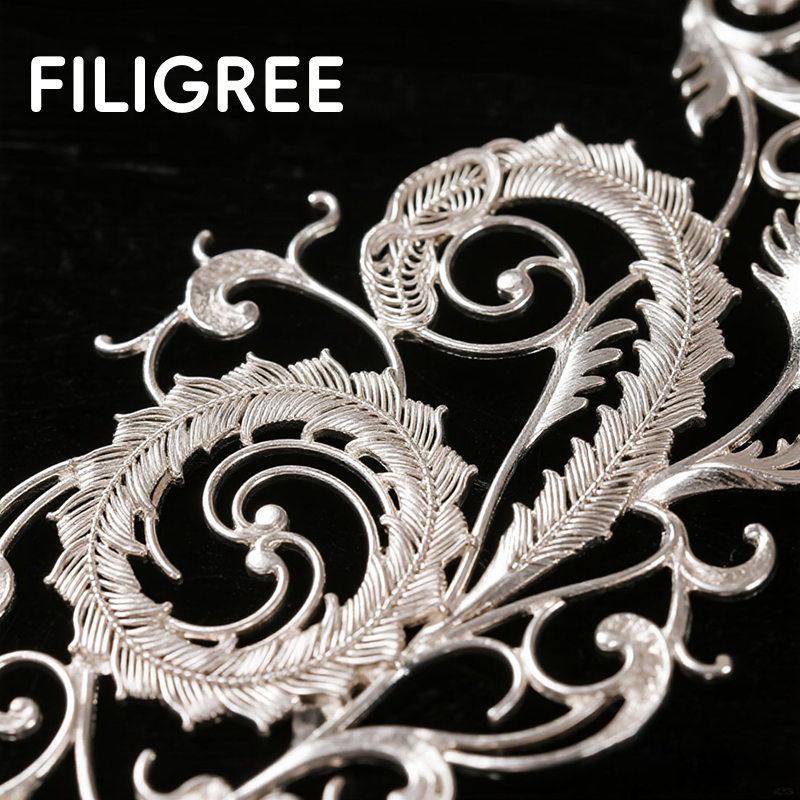
Filigree looks impossibly delicate — silver rendered as lace. Behind that lace is one of the most patient, hand-intensive processes in all of metalwork: drawing metal into hair-fine threads, twisting them, and soldering them into shape one tiny join at a time. This guide takes you inside how filigree jewelry is made, step by step, and explains what "filigree inlay" adds to the tradition.
Quick answer: Filigree is made by drawing precious metal (usually silver) into extremely fine threads, twisting or plaiting them for texture, shaping them into curls and scrolls, and soldering the pieces together into open, lace-like designs. It's almost entirely hand-work: a skilled artisan places and joins each tiny element individually. "Filigree inlay" sets these fine metal patterns into or against a base or gemstone, combining the openwork with color and structure.
It Starts With Thread
Every filigree piece begins with wire — but far finer than ordinary jewelry wire. The metal is repeatedly drawn through progressively smaller holes in a drawplate until it becomes a thread sometimes as fine as a hair.
Often two or more of these fine threads are then twisted together and flattened slightly, creating the characteristic beaded or roped texture that catches light along every curve. This textured thread is the raw vocabulary of filigree — everything that follows is shaped from it.
Getting to this point already requires skill: the thread must be even and strong enough to hold a shape without breaking. It's the unglamorous foundation that makes the delicate result possible.
Shaping the Lace
With thread prepared, the artisan begins shaping — this is where filigree becomes art:
- Bending and curling. Using fine tools and often just fingertips, the artisan forms the thread into scrolls, spirals, teardrops, and curves.
- Building motifs. These small shapes are arranged into the design — flowers, leaves, geometric lattices, or freeform lace.
- Framing. A slightly heavier wire frame often outlines the design, giving the delicate interior something to attach to.
- Filling. The interior is filled with the curled threads, each piece placed by hand to sit precisely within the frame.
There is no mold and little margin for error. The pattern exists only because a person placed every curl exactly where it belongs.
The Soldering: Where Skill Shows Most
Holding lace-like threads together without melting them is the true test of a filigree maker.
Tiny amounts of solder are applied at each join, and heat is controlled with extreme care — too much and the hair-fine threads simply melt away. A single piece can require dozens or hundreds of these microscopic joins, each one made by hand.
This is why filigree can't be truly mass-produced at the highest level: the soldering is slow, delicate, and utterly dependent on the artisan's control. When you look at fine filigree, you're seeing the sum of countless precise, patient joins.
Finishing: Polishing and Plating
Once assembled, the piece is cleaned and finished:
- Cleaning removes flux and residue from soldering.
- Polishing brings up the silver's shine and highlights the texture of the twisted threads.
- Plating or oxidizing (optional) may be applied — rhodium for extra brightness and tarnish resistance, or oxidation to darken recesses and emphasize the lace pattern.
Good finishing makes the difference between filigree that merely looks intricate and filigree that truly sparkles, with light playing across every twist.
What "Filigree Inlay" Adds
Traditional filigree is open metalwork. Filigree inlay — YIEON's signature approach — combines that fine threadwork with inlaid material or stones, so the lace-like metal frames or holds color and light.
| Classic openwork filigree | Filigree inlay | |
|---|---|---|
| Structure | Open lace of metal only | Fine metalwork set with/around inlay |
| Effect | Airy, all about the metal lace | Lace metal + color, light, or stone |
| Feel | Delicate, traditional | Delicate tradition + modern richness |
Inlay lets filigree carry gemstones, mother-of-pearl, or colored elements while keeping the signature hand-worked lace — bridging heritage technique and contemporary design.
Why Handmade Filigree Is Worth It
Understanding the process explains the value:
- Time and skill. Each piece is hours of drawing, twisting, placing, and soldering by a trained hand.
- Genuine uniqueness. Because it's placed by hand, no two filigree pieces are perfectly identical.
- Lightness with strength. Done well, filigree is astonishingly light yet holds its intricate shape.
- A living tradition. Choosing handmade filigree supports a craft that machines can imitate but not truly replicate.
When you wear fine filigree, you're wearing patience made visible — metal coaxed into lace, one join at a time.
Explore YIEON's Filigree Collection
Every YIEON filigree piece is crafted by hand and presented with its cultural story. A few pieces to explore:


Frequently Asked Questions
How is filigree jewelry made?
Precious metal is drawn into hair-fine threads, twisted for texture, shaped by hand into curls and scrolls, arranged into a design, and soldered together join by join into an open, lace-like pattern, then polished and optionally plated.
What is filigree made from?
Usually silver, though gold and other precious metals are used. The metal is drawn into very fine threads, which are the building blocks of every filigree design.
Why is filigree so delicate?
Because it's built from extremely fine threads shaped into open patterns. That intricacy is the whole appeal, and it's achieved entirely by hand rather than by casting a solid piece.
What is filigree inlay?
Filigree inlay combines fine filigree metalwork with inlaid material or stones, so the lace-like metal frames or holds color and light — pairing the traditional openwork with modern richness.
Why does handmade filigree cost more than cast jewelry?
Because it's hours of skilled hand-work: drawing thread, shaping each curl, and making dozens or hundreds of tiny soldered joins. It can't be truly mass-produced at the highest level.
Is each filigree piece unique?
Yes. Because every curl is placed and soldered by hand, no two pieces are perfectly identical — slight variation is a mark of genuine handmade filigree.
How is filigree soldered without melting?
By applying tiny amounts of solder at each join and controlling heat with great care. Too much heat melts the hair-fine threads, so precise control is the mark of a skilled maker.
Can filigree be made by machine?
Machines can imitate the look, but the finest filigree — with its hand-placed curls and delicate soldering — depends on an artisan's control and can't be truly replicated by mass production.
YIEON — heritage craft as wearable art. Explore the collection at yieon.art.