


How Kesi Silk Is Woven: Inside the 'Carved Silk' Process
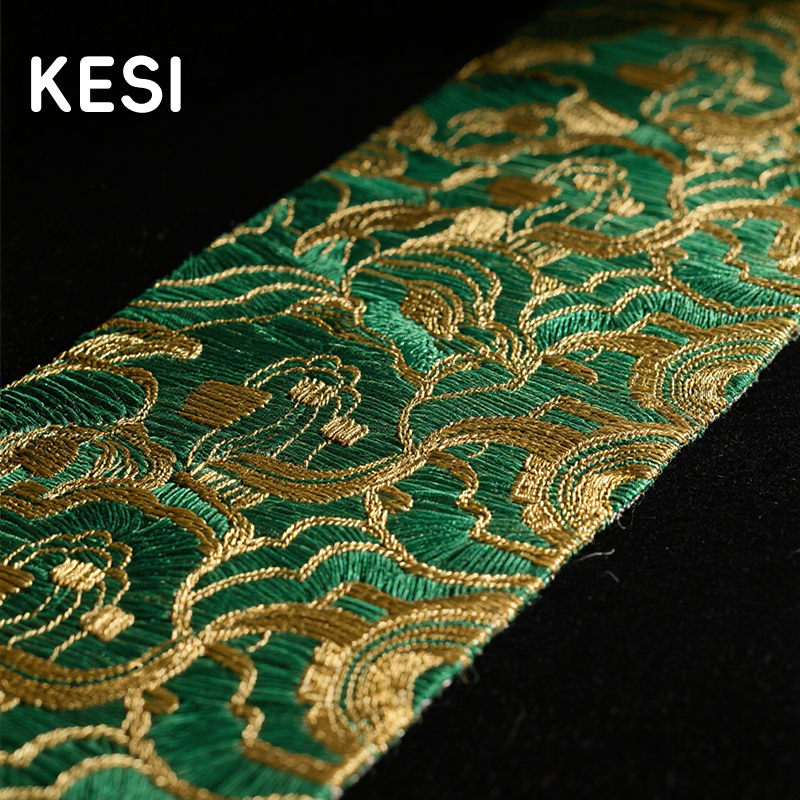
Kesi (缂丝) is often called the most demanding of all Chinese silk techniques — a tapestry weave so slow and skilled that a single scroll could occupy a master for months or years. What makes it so difficult, and so beautiful, is the way it's woven: color by color, block by block, rather than straight across the cloth. This guide takes you inside the kesi weaving process, from the loom setup to the signature slit-weave that gives "carved silk" its name.
Quick answer: Kesi is woven on a loom where colored weft threads are carried back and forth only within their own color areas — not across the full width of the fabric. Using many small bobbins, the weaver fills each color zone separately following a design placed beneath the warp, turning the thread back where colors meet and leaving a tiny slit. This block-by-block, hand-woven method creates painting-like detail and a reversible fabric, and is why a piece can take weeks to months.
What Makes Kesi Weaving Different
In ordinary weaving, the weft thread travels all the way across the fabric from edge to edge, row after row. Kesi does something fundamentally different: each colored weft is woven only within the area where that color belongs.
Where one color meets another, the weaver doesn't carry the thread across — they turn it back within its own zone and continue. This is why kesi can render a bird, a flower, or a line of calligraphy in crisp detail: color is placed exactly where the image needs it, like painting with thread.
This single difference — weaving in blocks rather than across — is the root of everything distinctive about kesi: the detail, the reversibility, and the extraordinary time it takes.
Setting Up: Loom, Warp, and Cartoon
Before weaving begins, the foundation is laid:
- The cartoon (design). A design — often based on a painting or calligraphy — is prepared and placed beneath or beside the warp threads as a guide the weaver follows.
- Warping the loom. Fine, undyed silk warp threads are tensioned on the loom. In the finished piece these warps stay largely hidden, becoming the invisible skeleton of the image.
- Preparing bobbins. Many small bobbins are wound with different colored silk wefts — the palette the weaver will "paint" with.
The setup itself demands care: the warp tension and the accuracy of the cartoon determine how faithfully the woven image will match the design.
The Slit-Weave Technique
Now the defining move — the technique that names the craft:
- The weaver works one color area at a time, passing its bobbin back and forth only within that zone.
- Where two color areas meet along a vertical edge, each color turns back within itself, leaving a fine slit between them.
- These slits are the signature of kesi. In the light they look as if the design has been incised or "carved" into the silk — hence 缂丝, "carved silk."
- Sometimes adjacent colors are interlocked or the slits are later stitched for strength, depending on the design.
Building an image this way — zone by zone, turn by turn — is painstaking, but it's what gives kesi its crisp, painting-like precision.
Why It Takes Weeks to Months
Kesi is measured in time as much as in silk:
| Factor | Why it slows the work |
|---|---|
| Block-by-block weaving | Every color area is filled separately, not in continuous rows |
| Many bobbins | The weaver constantly switches colors by hand |
| Fine detail | Gradients and small motifs require tiny, careful passes |
| No shortcuts | A mistake can mean unpicking hours of work |
A complex kesi artwork can occupy a master weaver for months or even years. This is the origin of the saying "an inch of kesi is worth an inch of gold" (一寸缂丝一寸金) — a reflection of both the labor and the value.
The Reversible Result
One remarkable outcome of the technique: kesi is identical on both sides. Because the image is woven into the fabric rather than embroidered on top, there is no "wrong" side — both faces show the same crisp picture.
This reversibility is a quick way to recognize authentic kesi and a testament to the skill involved: the weaver must build a clean image that reads perfectly from either direction, with no loose threads carried across the back (as they would be in other weaving). It's part of what elevates kesi from textile to fine art.
From Loom to Modern Jewelry
Historically, kesi's slow tapestry weaving produced imperial robes, scroll mountings, and woven "paintings." Today, that same painstaking aesthetic can be brought into modern jewelry and accessories — pieces that carry the woven, painting-like richness of kesi and the story of the technique behind it.
YIEON approaches kesi as living cultural material: honoring the block-by-block, hand-woven tradition while translating its luminous detail into contemporary wearable design. When you wear a kesi-inspired piece, you're wearing the legacy of one of the world's most demanding weaving crafts.
To keep kesi silk beautiful: protect it from prolonged sunlight (which fades silk) and humidity, avoid snagging, handle any jewelry silk element gently without soaking, and store flat or supported in a cool, dark, dry place.
Explore YIEON's Kesi Collection
Every YIEON kesi silk piece is crafted by hand and presented with its cultural story. A few pieces to explore:


Frequently Asked Questions
How is kesi silk woven?
On a loom where colored weft threads are carried back and forth only within their own color areas, using many small bobbins to fill each zone separately following a design beneath the warp. Where colors meet, the thread turns back, leaving a signature slit.
Why is kesi called "carved silk"?
Because where two colors meet, each turns back within its own area, leaving a tiny slit. In the light these slits look as if the design was carved or incised into the silk.
Why does kesi take so long to weave?
Every color area is filled separately rather than in continuous rows, the weaver constantly switches among many bobbins by hand, and fine detail requires tiny careful passes — so a complex piece can take months or years.
Why is kesi identical on both sides?
Because the image is woven into the fabric itself rather than stitched on top, and no threads are carried loosely across the back, both faces show the same crisp image — a true reversible tapestry.
What is a kesi "cartoon"?
It's the design or pattern — often based on a painting or calligraphy — placed beneath or beside the warp threads as a guide the weaver follows while building the image.
What does "an inch of kesi is worth an inch of gold" mean?
It's a traditional saying reflecting how labor-intensive and valuable kesi is — a complex piece can occupy a master weaver for months, making it as precious as gold by area.
How can I recognize authentic kesi?
Look for the fine slits between color areas and check whether the piece is identical on both sides. True kesi is woven block by block and is reversible, unlike embroidery or printing.
Can kesi be used in modern jewelry?
Yes. While traditionally used for robes and scrolls, kesi's woven, painting-like detail translates into contemporary jewelry and accessories that carry both its beauty and its heritage story.
YIEON — heritage craft as wearable art. Explore the collection at yieon.art.