


What Is Kesi Silk? The 'Carved Silk' Weaving Called the Sacred Craft of Textiles
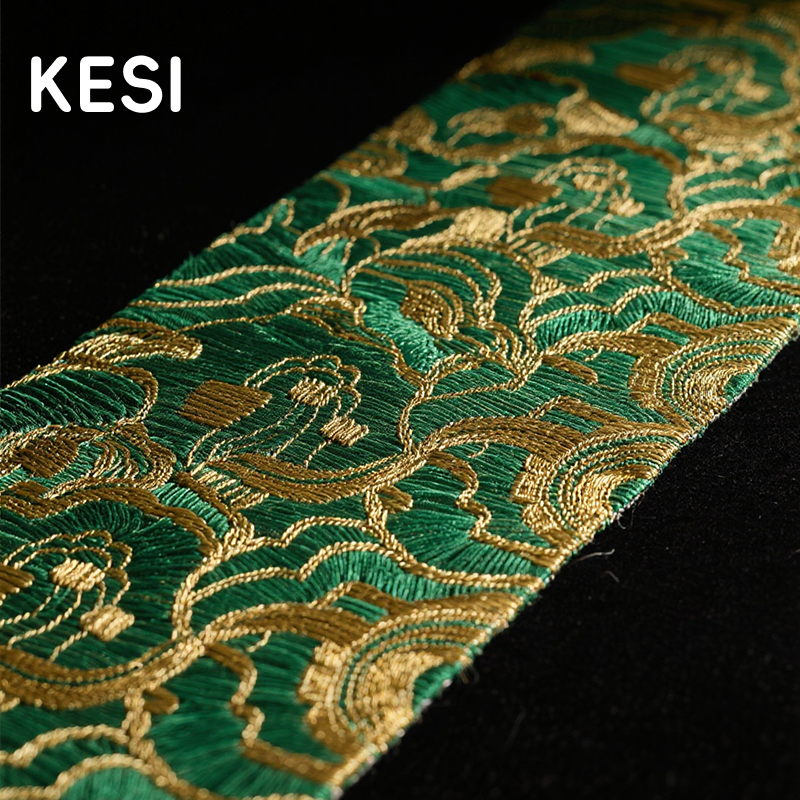
Of all China's silk traditions, one stands apart for its sheer difficulty: kesi (缂丝), often translated as "carved silk." For a thousand years it was so labor-intensive and so prized that a single scroll could take a master weaver years to complete, and it was reserved for imperial robes, religious art, and the reproduction of famous paintings in thread. There is even an old saying that an inch of kesi is worth an inch of gold. This guide explains what kesi silk is, why it earned the name "the sacred craft of textiles," how it's woven, and how its aesthetic lives on in modern jewelry.
Quick answer: Kesi (缂丝), or "carved silk," is a Chinese tapestry-weaving technique in which colored weft threads are woven back and forth only within their own color areas — not across the full width of the cloth. This creates crisp, painting-like images with tiny gaps between color blocks that look like they were "carved," and produces a reversible fabric identical on both sides. It is recognized as an intangible cultural heritage craft and was historically reserved for imperial use.
What Kesi Actually Is
Most woven cloth carries its weft threads all the way across the fabric, from edge to edge. Kesi does the opposite: each colored thread is woven back and forth only within the area where that color appears. Where two colors meet, the weaver turns the thread around and works back — leaving a minute slit between the color blocks.
Those tiny slits are the signature of kesi. In raised light they look as though the design has been incised or carved into the silk — which is exactly where the name "carved silk" (缂丝, kè sī) comes from. The technique also produces a fabric that is identical on both sides: a true reversible tapestry, with no "wrong" side.
Because color is built block by block rather than printed or embroidered on top, kesi can render extraordinarily fine, painting-like detail — gradients, calligraphy, birds and flowers — entirely in woven silk.
A Thousand Years of "An Inch of Kesi, an Inch of Gold"
Kesi rose to prominence during the Song dynasty (roughly a thousand years ago), when weavers began using the technique to reproduce famous paintings and calligraphy in silk. Because it was so slow and so skilled, kesi became a court art: imperial robes, ceremonial hangings, and treasured artworks.
The saying "一寸缂丝一寸金" — an inch of kesi is worth an inch of gold — captures both its value and its labor. A complex piece could occupy a master weaver for months or years, working thread by thread. That scarcity is why surviving historical kesi is held in major museum collections today.
Kesi is recognized as part of China's intangible cultural heritage, and the number of weavers who can execute it at the highest level remains small — one reason authentic kesi carries such cultural weight.
How Kesi Is Woven
The process rewards patience above almost any other textile craft.
- The cartoon. A design (often a painting or calligraphy) is placed beneath or beside the warp as a guide.
- Warp setup. Fine silk warp threads are tensioned on the loom — plain and undyed, they'll become invisible in the finished piece.
- Block-by-block weaving. Using many small bobbins, the weaver fills each color area separately, turning the weft back within its own zone rather than crossing the full width.
- Building the image. Color by color, the picture emerges — with the tell-tale slits where areas meet, sometimes stitched or interlocked for strength.
- Finishing. The completed tapestry is trimmed and mounted; because it's reversible, both faces are true.
There is no shortcut and little room for error: a mistake can mean unpicking hours of work. This is why kesi is measured in weeks and months, not hours.
Kesi vs. Embroidery vs. Brocade
Kesi is often confused with other Chinese silk arts. Here's how it differs.
| Kesi (缂丝) | Embroidery (刺绣) | Brocade (锦) | |
|---|---|---|---|
| How color is added | Woven in, block by block (tapestry) | Stitched on top of a finished ground | Woven with continuous patterned wefts |
| Both sides | Identical / reversible | One right side | Usually one right side |
| Signature look | "Carved" slits between colors | Raised, textured stitches | Repeating woven patterns |
| Feel | Flat, painting-like | Dimensional, tactile | Structured, often denser |
The quickest tell for kesi: look for the fine slits between color areas and check whether the piece is the same on both faces.
Kesi in Modern Jewelry and Accessories
Traditional kesi lives in scrolls and robes — but its aesthetic translates beautifully into wearable pieces. In jewelry and accessories, kesi motifs and kesi-inspired silk bring something rare: a woven, painting-like richness that most jewelry materials can't offer, plus a genuine heritage story.
YIEON's approach places kesi at the heritage end of design — treating it as living cultural material rather than a printed motif. A kesi-inspired piece carries the same idea that made the craft legendary: image built patiently, thread by thread, into something meant to last and to mean something.

How to Appreciate and Care for Kesi Pieces
Whether you're collecting a kesi artwork or wearing a kesi-inspired piece, a few pointers:
- Appreciate the detail. Hold it to the light and look for the slit-weave "carving" and the reversible faces — these are the marks of true kesi technique.
- Protect the silk. Keep textile pieces away from prolonged direct sunlight (which fades silk), high humidity, and snagging.
- Handle jewelry gently. For kesi-set jewelry, treat the silk element as delicate: avoid soaking, wipe metal parts carefully, and store flat or hung so the silk isn't crushed.
- Store thoughtfully. A cool, dark, dry place, ideally with the piece laid flat or supported, preserves both color and structure.
Cared for well, kesi keeps its luminous, painting-like quality for generations.
Explore YIEON's Kesi Collection
Every YIEON kesi silk piece is crafted by hand and presented with its cultural story. A few pieces to explore:


Frequently Asked Questions
What is kesi silk?
Kesi (缂丝), or "carved silk," is a Chinese tapestry-weaving technique where colored weft threads are woven back and forth only within their own color areas, creating crisp, painting-like images and a reversible fabric. It's recognized as an intangible cultural heritage craft.
Why is kesi called "carved silk"?
Because where two colors meet, the weaver turns the thread back within its own area, leaving a tiny slit. In the light these slits look as if the design was carved or incised into the silk.
Why is kesi so expensive?
It's extremely slow and skilled — woven block by block with many bobbins, a complex piece can take months or years. The old saying "an inch of kesi is worth an inch of gold" reflects both its labor and its value.
How is kesi different from embroidery?
Embroidery is stitched on top of finished cloth and has a right and wrong side. Kesi is a woven tapestry where the image is built into the fabric itself, and it's identical (reversible) on both sides.
Is kesi an intangible cultural heritage craft?
Yes. Kesi is recognized as part of China's intangible cultural heritage, and only a small number of weavers can execute it at the highest level.
When did kesi become famous?
It rose to prominence during the Song dynasty, about a thousand years ago, when weavers used it to reproduce paintings and calligraphy in silk and it became a prized court art.
Can you wear kesi as jewelry?
Yes. While traditional kesi appears in scrolls and robes, its motifs and silk translate into modern jewelry and accessories, bringing a woven, painting-like richness and a genuine heritage story.
How do I care for a kesi piece?
Keep silk away from direct sunlight, humidity, and snagging; handle any jewelry silk element gently without soaking; and store the piece flat or supported in a cool, dark, dry place.
YIEON — heritage craft as wearable art. Explore the collection at yieon.art.