


What Is Mother-of-Pearl Inlay? The Iridescent Art of Luodian
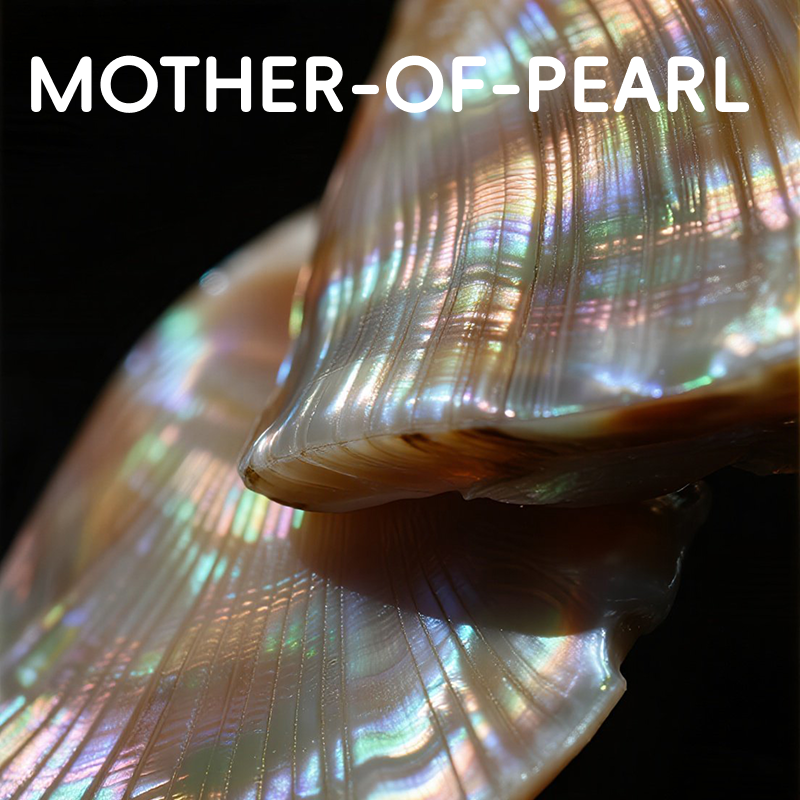
That shifting rainbow shimmer inside a seashell has fascinated makers for millennia. In China the craft of cutting and setting that shell into decorative surfaces is called luodian (螺钿) — mother-of-pearl inlay — and it turns an ordinary material into something that seems to hold light. This guide explains what mother-of-pearl is, what luodian inlay actually involves, its long history, how to recognize real nacre from plastic imitations, and how to wear and care for it.
Quick answer: Mother-of-pearl is nacre — the iridescent inner lining of certain mollusk shells. Mother-of-pearl inlay, known in China as luodian (螺钿), is the craft of cutting thin pieces of this shell and setting them into a base (lacquer, wood, or metal) to form shimmering images and patterns. It has over a thousand years of history in East Asia, is prized for its natural rainbow luster, and — because it's a natural material set by hand — no two pieces are ever identical.
What Mother-of-Pearl Actually Is
Mother-of-pearl, also called nacre, is the smooth, iridescent material that lines the inside of certain shells — the same substance a mollusk uses to build a pearl. Its shimmer isn't a pigment or a coating: it comes from the microscopic layered structure of the nacre, which splits light into shifting colors. That's why a mother-of-pearl surface seems to change hue as you tilt it.
Because the color is structural rather than painted on, it never fades. A genuine nacre inlay will glow the same way in a hundred years as it does today — one of the reasons it has been treasured across cultures for so long.
In jewelry and decorative art, mother-of-pearl is valued for exactly this living, luminous quality: a natural material that behaves like captured light.
What "Luodian" (Inlay) Means
Mother-of-pearl on its own is beautiful; luodian (螺钿) is what artisans do with it. The craft involves:
- Selecting shell. Pieces of shell are chosen for color and iridescence — different shells and different layers give different tones, from silvery white to deep peacock blue-green.
- Cutting. The shell is cut and shaped into thin pieces, sometimes astonishingly fine slivers, to match a design.
- Setting (inlay). These pieces are set into a prepared base — traditionally lacquer or wood, and in jewelry, metal — so the shell sits flush and forms the image.
- Finishing. The surface is polished so the inlay and base become one smooth, luminous plane.
The word "inlay" is the key: the shell is set into the material, not glued on top. That's what separates true luodian craft from a cheap sticker or print of a shell pattern.
A Thousand Years of Shimmer
Mother-of-pearl inlay has a long lineage in East Asia. Luodian flourished as a decorative art on lacquerware — boxes, screens, furniture, and ceremonial objects — for well over a thousand years, prized at court for turning everyday surfaces into shimmering pictures.
The craft spread and evolved across the region, pairing especially beautifully with lacquer: the deep, dark lacquer ground makes the iridescent shell leap out, a contrast that still defines the look today. Over centuries, artisans refined it from bold shell fragments to breathtakingly fine cut work.
That heritage is why a mother-of-pearl piece carries more than prettiness — it connects to a long tradition of treating light and shell as a fine-art medium.
Real Nacre vs. Imitation
"Mother-of-pearl look" is everywhere, much of it plastic. Here's how to tell genuine nacre inlay apart.
| Real mother-of-pearl (nacre) | Imitation ("MOP-look") | |
|---|---|---|
| Material | Natural shell / nacre | Plastic, resin, or printed film |
| Iridescence | Shifts and moves with the light; each piece unique | Flat, static, often a repeating printed rainbow |
| Temperature | Cool to the touch, like stone | Room-temperature, "plasticky" |
| Surface | Subtle natural variation and grain | Perfectly uniform |
| Set | Inlaid flush into the base | Often glued on top or printed |
| Aging | Color never fades (structural) | Can scratch, peel, or dull |
The quickest tell: tilt it. Real nacre's color travels across the surface and looks slightly different in every piece; a printed imitation stays flat and identical.

Mother-of-Pearl in YIEON's Jewelry
YIEON treats mother-of-pearl as a fine-art material, pairing hand-cut nacre with modern design and, often, with daqi lacquer — echoing the classic lacquer-and-shell tradition in a contemporary, wearable form.
Because each piece of shell is naturally unique, every inlay is one of a kind: the exact pattern of iridescence in your piece exists nowhere else. That combination — a thousand-year craft, a natural material that never fades, and genuine one-of-a-kind character — is what makes mother-of-pearl feel special rather than merely decorative.

How to Choose and Care for Mother-of-Pearl
Choosing:
- Look for movement. Genuine nacre shifts color as you tilt it; that living shimmer is the whole point.
- Check the setting. Quality inlay sits flush and smooth, not raised or glued-looking.
- Embrace uniqueness. Slight natural variation is a feature of real shell, not a flaw.
Caring:
- Keep it dry and gentle. Mother-of-pearl is relatively soft and porous. Avoid prolonged water, harsh chemicals, perfume, and ultrasonic cleaners.
- Wipe, don't scrub. Clean with a soft, slightly damp cloth and dry immediately.
- Store separately. Keep it away from harder stones and metal that could scratch the surface.
- Put it on last. Apply cosmetics and perfume before wearing, to protect the nacre.
Treated kindly, mother-of-pearl keeps its living glow indefinitely — the color is built into the shell, so it never fades.
Explore YIEON's Mother-of-Pearl Collection
Every YIEON mother-of-pearl piece is crafted by hand and presented with its cultural story. A few pieces to explore:


Frequently Asked Questions
What is mother-of-pearl?
Mother-of-pearl, or nacre, is the iridescent inner lining of certain mollusk shells — the same material that forms a pearl. Its shimmer comes from its layered microscopic structure, which splits light into shifting colors.
What is mother-of-pearl inlay (luodian)?
Luodian (螺钿) is the craft of cutting thin pieces of mother-of-pearl and setting them into a base such as lacquer, wood, or metal to form shimmering images and patterns. The shell is set into the surface, not glued on top.
Is mother-of-pearl the same as a pearl?
They're the same material — nacre — but formed differently. A pearl grows in layers around an irritant inside a mollusk; mother-of-pearl is the nacre lining the inside of the shell itself.
How can I tell real mother-of-pearl from plastic?
Tilt it: genuine nacre's color shifts and travels across the surface and is unique in every piece, while plastic imitation looks flat and identical. Real nacre also feels cool to the touch and shows subtle natural variation.
Does mother-of-pearl fade over time?
No. Its color is structural — created by the shell's layered surface, not by dye — so it never fades. With gentle care a piece keeps its glow indefinitely.
Why is each mother-of-pearl piece unique?
Because it's a natural material. Every piece of shell has its own pattern of iridescence, so each hand-cut inlay is genuinely one of a kind.
How do I care for mother-of-pearl jewelry?
Keep it dry, avoid chemicals, perfume, and ultrasonic cleaners, wipe gently with a soft damp cloth and dry immediately, store it separately from harder items, and put it on after applying cosmetics.
Why is mother-of-pearl often paired with lacquer?
The deep, dark lacquer ground makes the iridescent shell stand out dramatically — a contrast refined over a thousand years of luodian tradition, and one YIEON continues in modern designs.
YIEON — heritage craft as wearable art. Explore the collection at yieon.art.